About Baby Food Rules. And Why Not Following Them
When it comes to feeding babies with solids, rules are everywhere.
Charts.
Schedules.
Lists of “allowed” and “forbidden” foods.
At some point, we stopped trying to follow all of them.
Instead, we asked a simpler question:
What would a baby eat if food didn’t come from supermarkets?
That question changed everything.
Feeding a Baby Is Not a Science Experiment
When we started solids with Mike, we didn’t want to turn every meal into a calculation.
We weren’t trying to raise a perfect eater.
We weren’t chasing milestones.
We just wanted food to make sense.
So we chose simple, local foods – fruits and vegetables that grow naturally where we live, or in climates similar to ours.
Not because it was trendy.
But because it felt… logical.
Letting the Body Recognize What Feels Familiar
There’s something intuitive about offering foods that humans have eaten for generations.
Apples.
Seasonal vegetables.
Simple roots.
Our thinking was this: Mike’s body didn’t start from zero.
His digestion, his immune system, his biology – they all come with history.
Local, seasonal foods felt easier for his body to recognize and process.
And from our experience, they were.
Why We Avoided Highly Processed Baby Foods
We didn’t want Mike’s first tastes to be altered.
No added sugar.
No salt.
No sweeteners.
No artificial flavors.
To an adult, food prepared this way can feel bland.
To a baby, it’s intense.
A carrot doesn’t need enhancement when you’ve never tasted sugar.
An apple is already sweet enough.
Babies don’t miss what they’ve never been introduced to.
Adapting to the Baby. Not to the Rules
One of the biggest lessons we learned is this:
Books don’t eat your food. Babies do.
We adapted constantly:
- firmer foods only when his teeth allowed it
- more complex textures only when he could actually handle them
- new combinations when curiosity replaced hesitation
We didn’t rush complexity.
We followed readiness.
That meant waiting.
That meant changing plans.
That meant trusting observation more than instructions.
About Allergies and Food Reactions
We also avoided high-risk allergenic foods early on.
Not forever.
Not out of fear.
But because timing matters.
When a reaction did happen, we paused.
We adjusted preparation.
We reintroduced foods slowly, with medical guidance.
This approach helped us avoid panic and build confidence.
Raw, Cooked, Simple. Not Fancy
Whenever possible:
- foods were raw or gently cooked
- never fried
- minimally processed
We didn’t aim for Instagram meals.
We aimed for digestible ones.
Sometimes that meant a single ingredient on a spoon.
Sometimes it meant repetition.
And that was enough.
Something Unexpected Happened to Us Too
As Mike learned to eat simply, we did too.
We cooked more at home.
We paid attention to ingredients.
We noticed how intense restaurant food tasted when we ordered it.
Too salty.
Too sweet.
Too much.
Things we never noticed before becoming parents.
Our child didn’t adapt to our habits – he quietly improved them.
Healthy Eating Can Go Both Ways
We often talk about teaching children to eat better.
But sometimes, parenting works in reverse.
You move from rushed meals and processed food to slower, simpler eating – together.
Not because you forced it.
But because it started to feel better.
There Is No Perfect Way to Feed a Baby
This is not advice.
It’s not a rule.
It’s just our experience.
Simple foods.
Local ingredients.
Slow introduction.
Observation over pressure.
And a baby who eats what makes sense for him.
That’s all we ever aimed for.
Privacy & Image Disclaimer
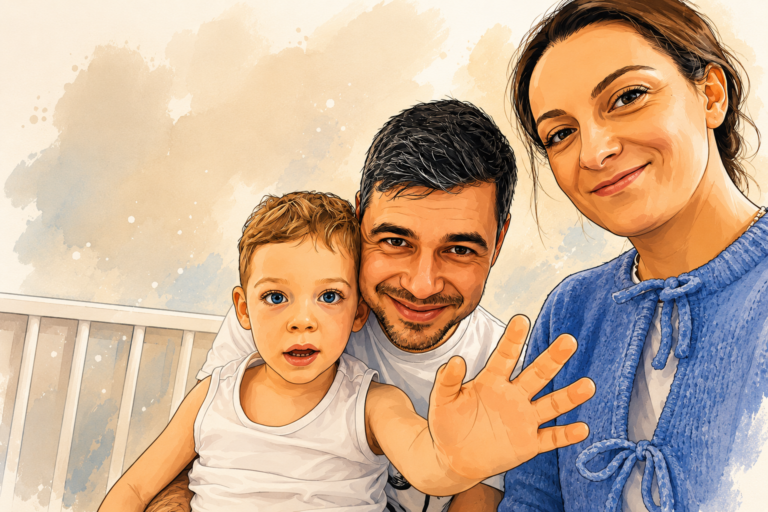
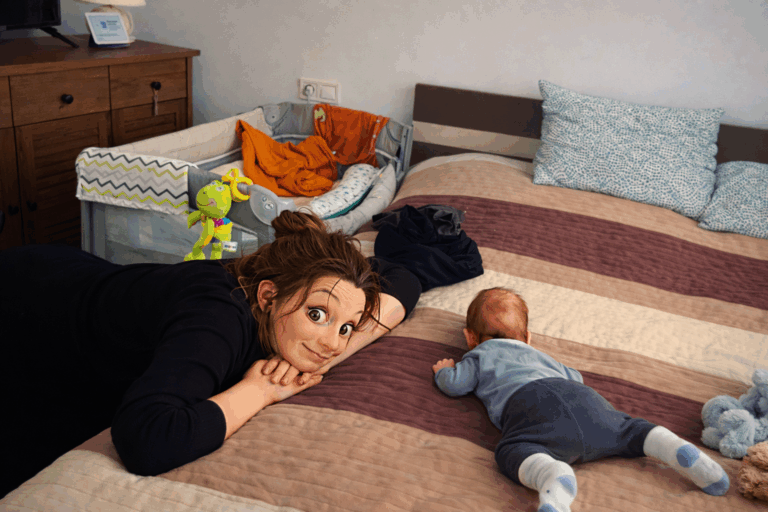
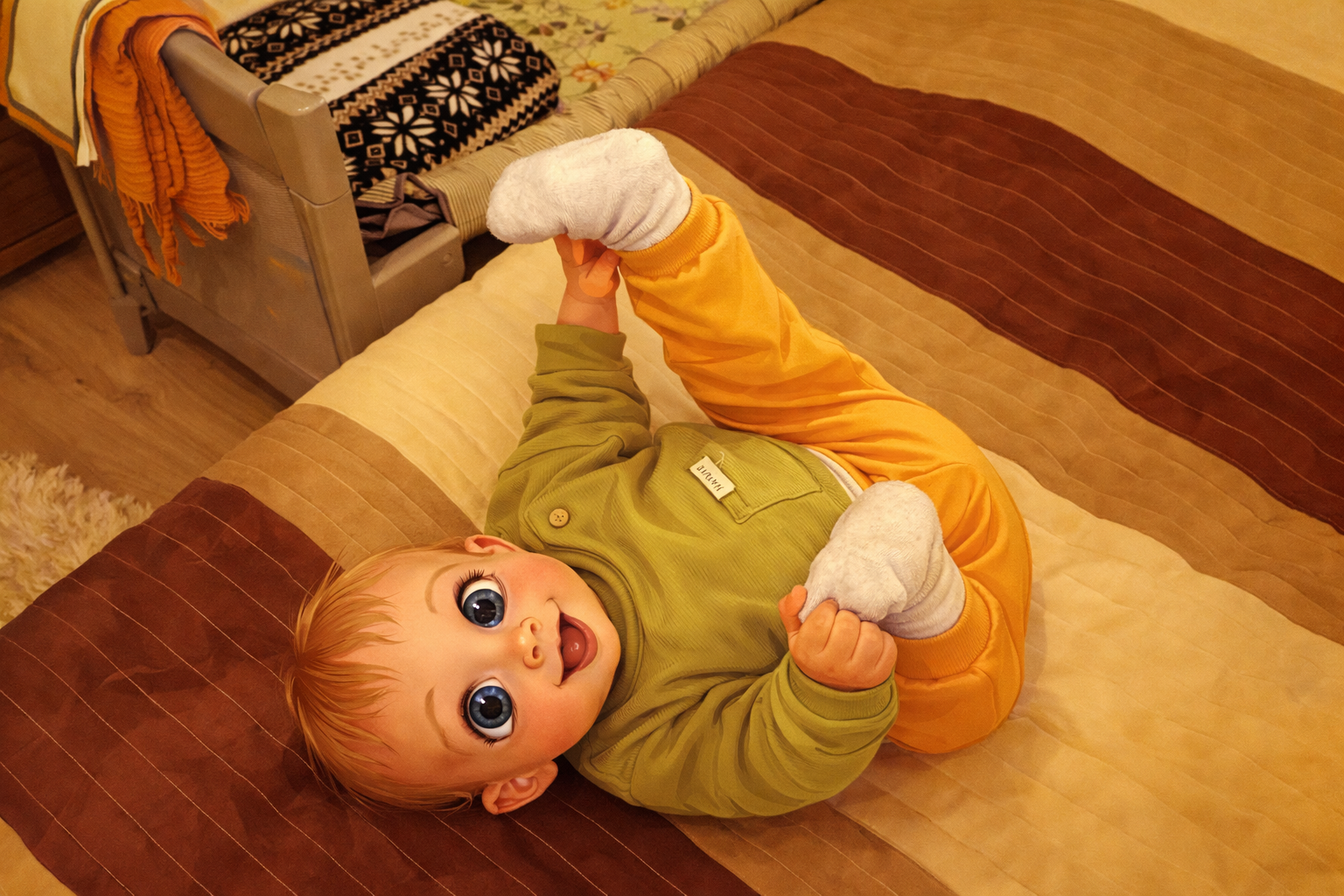
To protect our family’s privacy, all images on this blog are real-life moments, visually transformed into cartoon-style illustrations using AI. The stories are real. The emotions are real. The people are real. The art style is simply our way of keeping intimacy safe.