Starting Solids With a Baby: When Diversification Feels Harder Than You Expected
When you reach the diversification stage, you think you’ve made it.
You’ve survived the newborn phase.
The sleepless nights.
The feeding anxiety.
The constant “Is this normal?” questions.
So when it’s time to introduce solid foods, you expect things to finally get easier.
For me, they didn’t.
Diversification Looks Simple. Until You’re Actually Doing It
On paper, starting solids sounds easy.
You introduce one food at a time.
You watch for reactions.
You wait a few days.
You move on.
In real life, it feels more like an exam you didn’t study for.
I remember our first solid meal vividly.
It was apple. A simple choice. A low-risk food. Or so I thought.
And then Mike’s foot turned red and swollen.
The First Solid Food Reaction: Panic Sets In
Seeing a physical reaction on your baby’s body is terrifying.
Even when it’s mild.
Even when your pediatrician stays calm.
Even when everyone tells you it’s probably nothing serious.
Your brain doesn’t hear logic.
It hears danger.
Apple is usually considered a low-allergen food. That’s why we chose it. But babies’ bodies are still learning how to react to the world, and sometimes the immune system overreacts.
In our case, the reaction showed up as swelling and redness on one foot.
My first emotion? Confusion.
My second? Fear.
My third? Guilt.
What We Did Next (And Why It Helped)
This is where having a supportive pediatrician makes all the difference.
We didn’t push forward.
We didn’t panic and quit solids entirely.
We paused.
A few days without solid food.
Letting his body reset.
Then trying again – differently.
We reintroduced apple, but this time cooked.
And it worked.
Cooked apple was tolerated perfectly. No swelling. No redness. No discomfort.
After that, we slowly moved forward:
- cooked apple,
- raw apple later,
- then alternating fruit and vegetables.
No further allergic reactions. No new issues.
Just cautious progress.
How to Introduce Solids After a Reaction
One of the biggest questions I had – and one I see other parents ask all the time – was this:
“If a baby tolerates one food, do you keep giving it when you introduce a new one?”
The answer, at least in our case and with medical guidance, was yes.
When introducing a new food:
- we kept previously tolerated foods in rotation,
- we added only one new ingredient at a time,
- we watched closely for reactions.
This helped us identify patterns and reduced anxiety. It also helped Mike get familiar with foods he already liked, instead of starting from zero every time.
The Mental Load of Diversification
No one really talks about the mental side of starting solids.
You’re constantly thinking:
- What did he eat yesterday?
- How many days should I wait?
- Can I combine foods yet?
- Is this reaction normal?
- Am I doing this wrong?
It honestly felt like a math problem with no clear formula.
I remember thinking:
“If today went well, what am I allowed to do tomorrow?”
It was overwhelming – not because solids are hard, but because decision fatigue is real.
When Food Refusal Is Not a Failure
As diversification progressed, another challenge appeared: refusal.
Some foods were met with curiosity.
Others with immediate rejection.
And some, even today, are met with Mike’s very clear statement:
“I don’t even look at them.”
And that’s okay.
Food refusal doesn’t mean failure. It doesn’t mean you did something wrong during diversification. Sometimes it just means a child isn’t ready – or simply doesn’t like something.
We learned to respect that.
What Helped Us Get Through This Stage
Looking back, a few things made diversification manageable:
- Trusting our pediatrician.
- Introducing foods slowly and intentionally.
- Not rushing combinations.
- Accepting pauses when needed.
- Letting go of perfection.
We didn’t follow a strict chart.
We followed Mike’s reactions.
Diversification Is Not a Straight Line
One of the biggest myths about starting solids is that it’s a smooth progression.
It’s not.
There are pauses.
There are setbacks.
There are moments where you question everything.
But there are also moments of joy. Watching your baby discover textures, flavors, and preferences.
Even when it’s hard, it’s still a step forward.
If You’re in the Middle of It Right Now
If diversification feels harder than you expected, you’re not alone.
If you feel confused, overwhelmed, or scared after a reaction – that’s normal.
And if you’re taking it slow, pausing, or adjusting – you’re doing exactly what a parent should do.
Starting solids isn’t about checking boxes.
It’s about learning your child.
And that takes time.
Privacy & Image Disclaimer
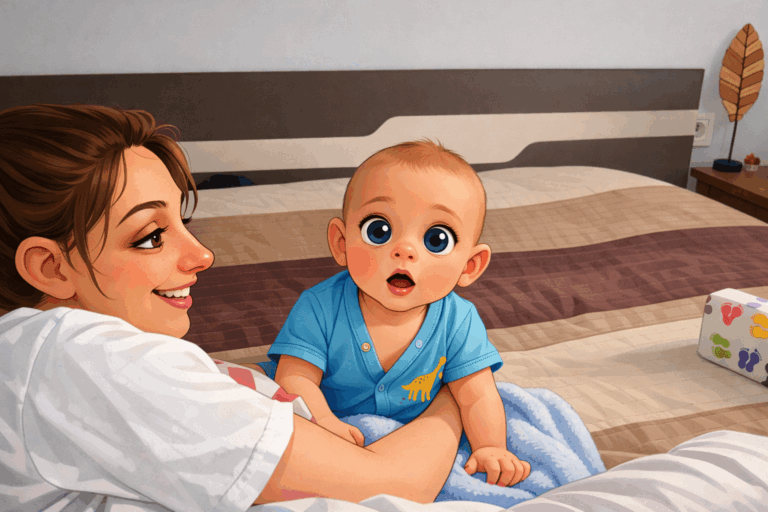
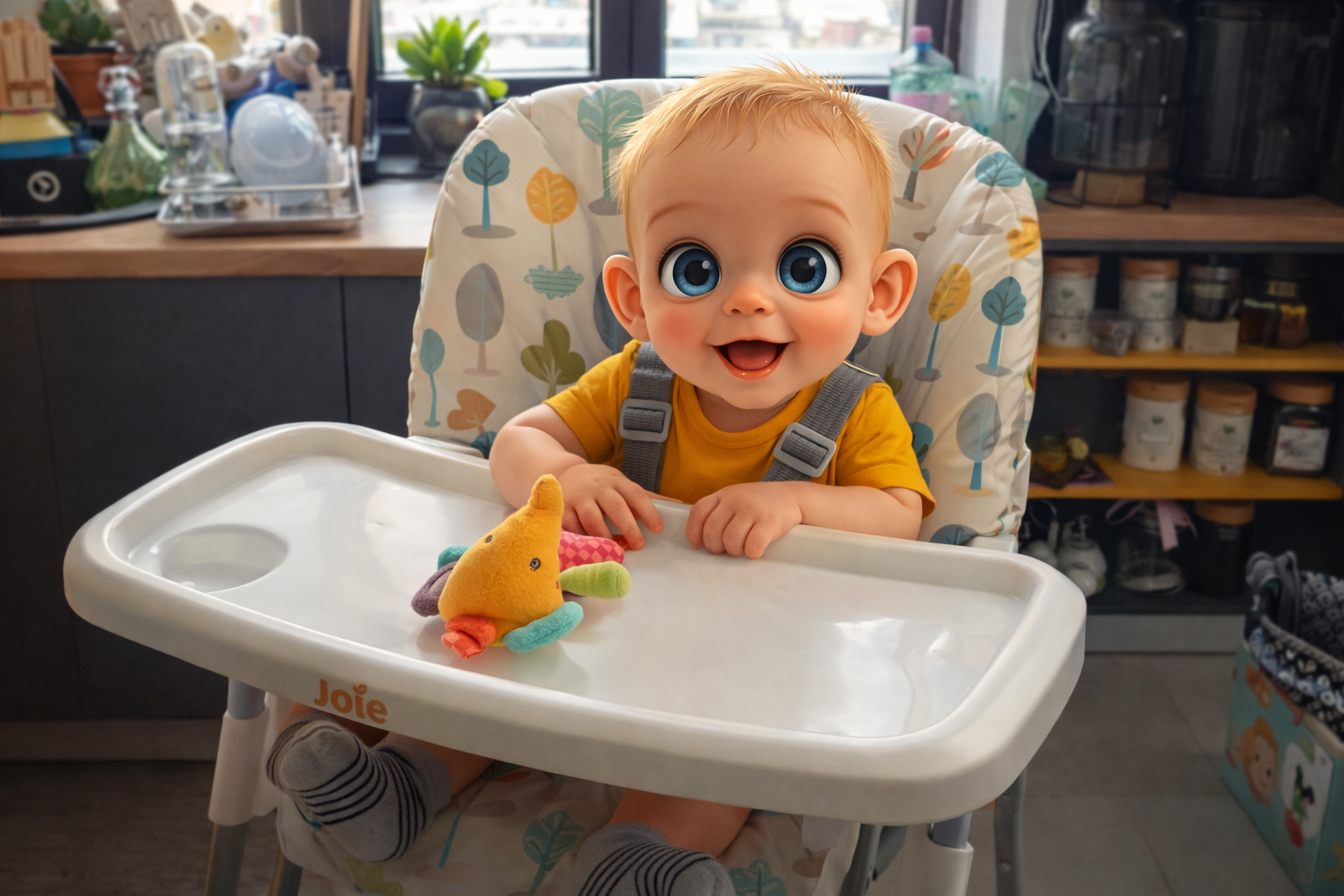
To protect our family’s privacy, all images on this blog are real-life moments, visually transformed into cartoon-style illustrations using AI. The stories are real. The emotions are real. The people are real. The art style is simply our way of keeping intimacy safe.