When a Cold Turns Into Pneumonia in a Toddler – It Started Like Every Other Daycare Cold
Yes, it just started like every other daycare cold and that’s what made it dangerous.
If you search things like:
- toddler pneumonia symptoms,
- how pneumonia starts in toddlers,
- wheezing toddler,
- when to go to ER toddler cough
…you probably already know the hardest part:
Pneumonia in toddlers rarely announces itself dramatically in the beginning.
For us, it started exactly like every other daycare illness Mike had already gone through.
A runny nose.
A little cough.
Mild fatigue.
Some mucus.
Nothing shocking.
And honestly, after months of daycare germs and constant colds, you stop panicking at every symptom. You almost become conditioned to think:
“It’s probably another normal virus.”
At first, even the pediatrician told us it sounded like a common cold.
No alarming lung sounds.
No major concerns.
Just the usual treatment:
- hydration,
- vitamins,
- plant-based immune supplements,
- fever medication if needed.
And for a short moment, we believed that would be enough.
Then the Cough Changed
This is the detail we remember most clearly.
At some point, Mike’s cough stopped sounding like a simple throat irritation and started sounding… heavier.
Deeper. Wet.
Then came the breathing sounds.
Not loud wheezing at first. Not dramatic gasping.
Just a strange sound in his chest that honestly reminded us of water dripping or bubbling. Like something was moving inside his lungs when he breathed.
And if you are a parent reading this after Googling:
- crackling chest toddler,
- rattling breathing child,
- bubbly chest sound toddler,
…yes. That sound matters.
The Fever That Wouldn’t Properly Go Away
Then the fever came.
At first: 38°C.
Then 39°C.
Then higher.
Sometimes the fever medication helped. Sometimes barely.
This is one of the most emotionally exhausting parts of parenting a sick toddler: watching numbers on a thermometer while trying not to panic. Because no matter how rational you try to stay, once your child’s fever keeps climbing, your brain immediately starts imagining worst-case scenarios.
And what made things harder was Mike’s personality.
As we’ve written before about how he reacted at the doctor, he rarely complains dramatically.
He becomes quieter.
More withdrawn.
More tired.
Which somehow feels even scarier than crying.
The Night We Went to the Pediatric ER
One evening, things escalated. Mike vomited after eating while he still had fever.
At the time, we didn’t know that eating during fever can sometimes trigger vomiting in children. We only learned that later from the hospital staff. But in the moment? It terrified us.
Especially combined with:
- worsening cough,
- chest sounds,
- high fever,
- fatigue.
So we went to the pediatric emergency room. Honestly, like many parents, we hesitated before going.
Because pediatric ER visits often mean:
- long waiting times,
- crowded rooms,
- exhausted children,
- stressed parents.
But once breathing changes appear, hesitation disappears very quickly.
What Happened at the ER
At triage:
- they checked his temperature,
- monitored oxygen levels,
- performed RSV/flu testing,
- listened to his lungs.
They also did a chest X-ray.
The results showed something on the lungs, but according to the doctors, it wasn’t severe enough yet for antibiotics.
So they treated him conservatively:
- inhalation therapy,
- Ventolin,
- monitoring,
- supportive care.
And we were sent home with instructions to continue treatment and monitor symptoms carefully. At that point, we desperately wanted to believe things would improve.
They didn’t.
How Pneumonia Symptoms Progressed in Our Toddler
Over the next days, the illness evolved further.
The coughing intensified.
The chest sounds persisted.
The fatigue remained.
And when we returned to the pediatrician for follow-up, the diagnosis changed: pneumonia.
That moment hits differently as a parent. Because suddenly the word feels heavy.
Pneumonia sounds serious even when doctors stay calm.
And in toddlers, everything involving breathing feels emotionally overwhelming.
The Emotional Reality of Watching Your Child Struggle to Breathe
People often underestimate how emotionally intense respiratory illnesses are for parents. You stop sleeping normally.
You listen constantly:
- Is he breathing okay?
- Is the cough worse?
- Is the chest moving strangely?
- Is the fever coming back?
- Is he too quiet?
At night, every sound becomes important. Every silence too.
And once your child develops pneumonia once, future colds stop feeling “simple.”
That changed us permanently.
Mike’s Calmness Made Everything Stranger
One thing that stayed consistent through all of this was Mike himself.
He remained incredibly calm.
At the ER.
During injections.
During blood tests.
During examinations.
Doctors repeatedly told us:
“He’s unbelievably cooperative.”
And while part of us felt proud, another part hurt deeply for him. Because we knew he was scared. He simply carried fear differently.
As parents, that’s emotionally complicated too.
When children scream, you immediately know they’re struggling. When they stay quiet, you start wondering how much they’re holding inside.
Why Some Daycare Colds Become More Serious
This is something we learned gradually. Not every child reacts to viruses the same way.
Some toddlers bounce back after two days.
Others develop complications involving:
- bronchiolitis,
- wheezing,
- pneumonia,
- reactive airways,
- breathing difficulties.
Eventually, after repeated respiratory illnesses, doctors explained that Mike’s respiratory system reacts aggressively after infections.
And suddenly many things connected:
- prolonged coughing,
- wheezing,
- recurring lung complications,
- pneumonia after viral infections.
The Guilt Parents Feel When a Cold Becomes Pneumonia
This part matters. Because after pneumonia, parents replay everything:
- Did we wait too long?
- Did we miss symptoms?
- Did we send him back to daycare too soon?
- Should we have insisted on antibiotics earlier?
- Were we too calm?
- Or too anxious?
The truth?
You usually only understand the seriousness of pneumonia once it has already progressed. That’s why parents search endlessly online for phrases like:
- how pneumonia starts in toddlers,
- toddler wheezing at night,
- crackling chest toddler,
- when to worry about toddler cough.
You’re trying to connect patterns before things worsen. We did the same.
What We Learned From Toddler Pneumonia
We learned to trust behavioral changes more. Not just fever. Not just coughing.
But:
- low energy,
- breathing changes,
- unusual quietness,
- chest sounds,
- reduced appetite,
- strange sleep patterns.
And honestly? We also learned that parenting a child with recurrent respiratory issues changes your nervous system permanently.
You become more alert.
More observant.
More cautious.
Not because you want to panic. But because once you’ve heard that chest sound before, you never forget it.
What We’d Tell Other Parents Now
If your toddler has:
- persistent fever,
- wheezing,
- chest crackling,
- worsening cough,
- unusual fatigue,
- breathing changes,
please trust your instincts and seek medical evaluation.
Maybe it’s a simple cold. Maybe it isn’t.
And if you’re already deep into Google searches at 2 AM, scared and exhausted, here’s something important:
You are not overreacting because you care.
You’re parenting.
And sometimes parenting means sitting beside a sleeping child, listening carefully to every breath, hoping tomorrow sounds a little easier than today.
Privacy & Image Disclaimer
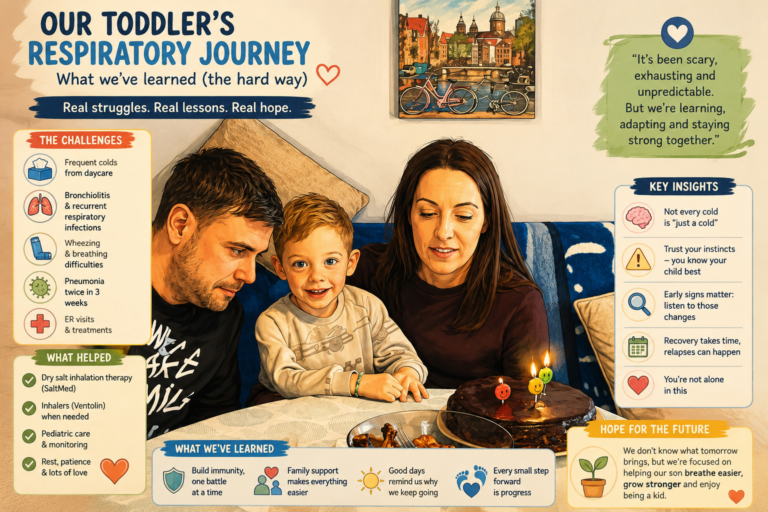
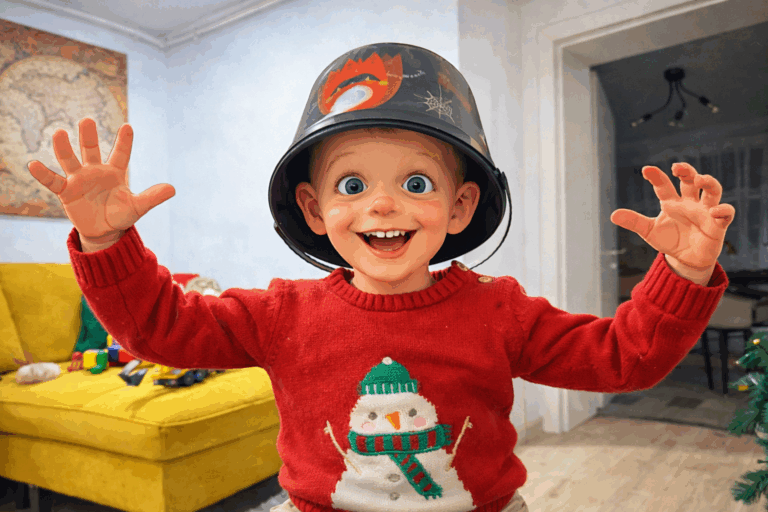
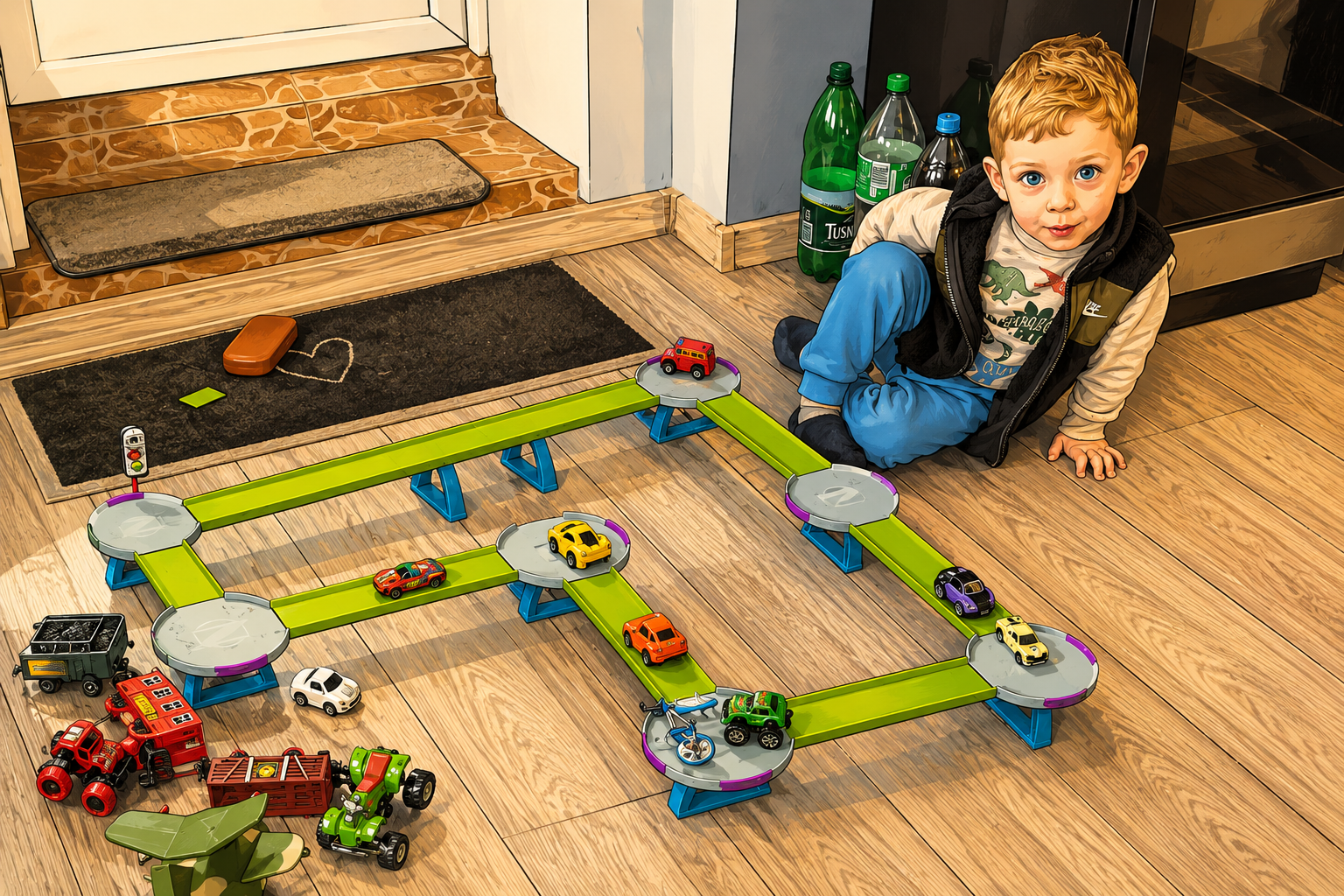
To protect our family’s privacy, all images on this blog are real-life moments, visually transformed into cartoon-style illustrations using AI. The stories are real. The emotions are real. The people are real. The art style is simply our way of keeping intimacy safe.