Why You Shouldn’t Scold or Yell at Your Child: Age-Appropriate Parenting That Actually Works
Let’s talk today about how understanding your child’s brain changes everything or, actually, about why we don’t yell at Mike and how we try to parent without fear.
Parenting expectations vs. reality (and why we get it wrong)
One of the biggest problems in parenting doesn’t start with children.
It starts with us – the adults.
We are grown-ups with grown-up problems: deadlines, bills, stress, lack of sleep, very little patience and very high expectations. And somehow, without realizing it, we expect our children to keep up.
But here’s the truth no one really prepares you for:
👉 A child is not a small adult.
Not at 2. Not at 5. Not even at 10.
And expecting adult behavior from a developing brain is a guaranteed recipe for frustration – for everyone involved.
Why children don’t behave “properly” (and never will)
Understanding child brain development
A toddler or young child:
- doesn’t have emotional regulation,
- doesn’t understand social rules,
- doesn’t grasp responsibility,
- doesn’t feel shame the way adults do.
And this is not bad parenting.
It’s normal brain development.
Their brains are still forming. Concepts like “good behavior,” “what will people think,” or “this is inappropriate” simply don’t exist yet.
So when a child screams, cries, throws things, refuses to listen or embarrasses you in public – they’re not being disrespectful.
They’re being human.
Why scolding and punishment don’t work
What children actually understand when you yell
Here’s the uncomfortable truth:
When you scold a child, they don’t understand why you’re upset.
They only understand that you’re upset.
They don’t process lessons.
They process emotions.
Yelling, punishment or harsh reactions don’t teach:
- discipline,
- respect,
- self-control.
They teach:
- fear,
- confusion,
- emotional shutdown.
A child doesn’t think:
❌ “I shouldn’t do this again.”
They think:
❌ “Something is wrong with me.”
Gentle parenting isn’t permissive parenting
Let’s clear something up.
Not scolding doesn’t mean:
- no boundaries,
- no rules,
- no structure.
It means age-appropriate expectations.
You can be:
- firm,
- consistent,
- present.
Without being:
- aggressive,
- humiliating,
- emotionally overwhelming.
Children need guidance, not emotional pressure they’re not equipped to handle.
See the world through your child’s eyes
This changes everything
One of the best pieces of advice we ever heard was simple:
👉 Stop expecting your child to understand your world.
Start trying to understand theirs.
When you look at situations through a child’s eyes:
- frustration makes sense,
- meltdowns make sense,
- emotional chaos makes sense.
And suddenly, patience becomes easier.
Not because the situation changes, but because your perspective does.
Our reality: losing patience (and finding it again)
Let’s be honest.
We lose patience too.
We get tired.
We get overwhelmed.
We react wrong sometimes.
We’re not perfect parents and we don’t want to be.
But we remind ourselves of one promise we made early on:
👉 Mike’s happiness matters more than our momentary frustration.
So when we mess up, we reset.
No guilt.
No blaming.
No endless apologies.
We calm down.
We reconnect.
We start again.
The power of example in child education
Children copy what they live, not what they’re told
This part is crucial.
Children don’t learn from lectures.
They learn from watching.
If you:
- yell → they’ll yell.
- get aggressive → they’ll get aggressive.
- panic → they’ll panic.
If you:
- speak calmly,
- show empathy,
- regulate your emotions,
they will too – over time.
Your behavior is the lesson.
The couple relationship matters more than you think
Children don’t just absorb how you treat them.
They absorb how you treat each other.
If parents are:
- tense,
- constantly arguing,
- emotionally unavailable,
children feel it even if nothing is said.
A calm, respectful relationship creates a safe emotional environment.
And safety is the foundation of good behavior.
Less screens. More connection.
We truly believe this. No screen can replace:
- eye contact,
- conversation,
- play,
- laughter.
Children need interaction, not distraction.
Talk to them.
Play with them.
Be present.
Even when you’re tired.
Especially when you’re tired.
Final thought: raise a happy child, not a “well-behaved” one
You don’t raise character through punishment.
You raise it through connection.
A child raised with:
- love,
- patience,
- understanding,
- emotional safety,
will naturally grow into:
- a calm adult,
- an empathetic human,
- a confident person.
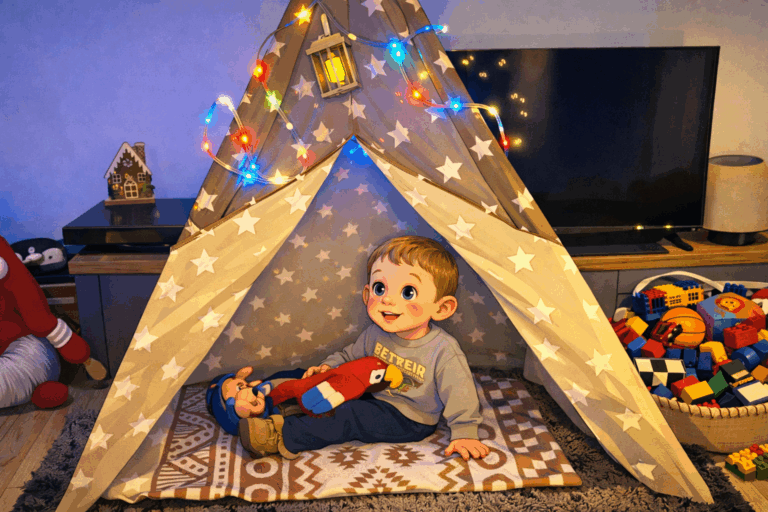
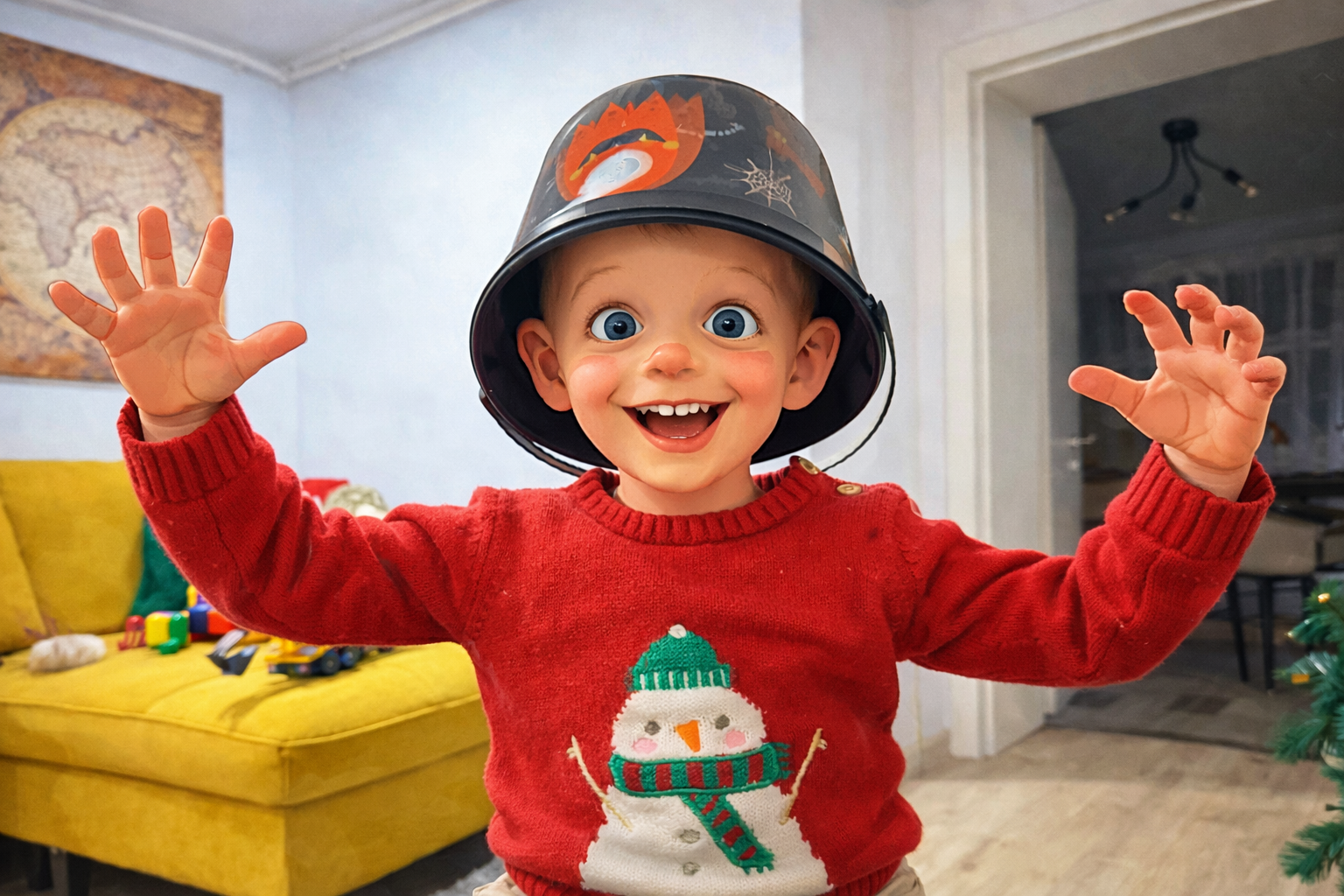
At 2 years and 10 months, Mike is calm, curious, kind and emotionally expressive – not because we control him, but because we respect his development.
And yes, it works.
Privacy & Image Disclaimer
To protect our family’s privacy, all images on this blog are real-life moments, visually transformed into cartoon-style illustrations using AI. The stories are real. The emotions are real. The people are real. The art style is simply our way of keeping intimacy safe.