Why Some Kids Don’t Cry at the Doctor. And Why That Can Be Emotional for Parents Too
Before becoming parents, we thought the “hard moments” would mostly involve tantrums. Screaming. Refusing medicine. Meltdowns in public places.
And yes, sometimes that happens.
But with Mike, we discovered a completely different emotional challenge:
a child who feels everything deeply… and barely shows it.
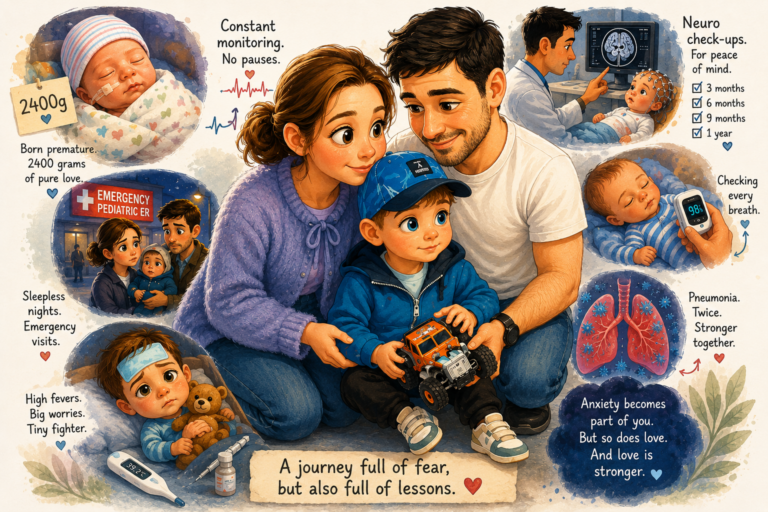
The first time we truly noticed it was during one of his hospital visits.
He was sick, exhausted, feverish, and clearly uncomfortable. He had already been coughing for days and eventually needed tests, injections, and blood work.
And yet – he didn’t cry.
Not because he enjoyed any of it.
Not because he was fearless.
But because that’s simply who he is.
Some Children Internalize Stress Instead of Expressing It
A lot of parenting content online focuses on loud emotions.
But quieter children can be harder to read.
Mike is naturally more reserved and observant. Even at daycare, he needed months to adapt socially. He preferred watching before participating. Playing quietly before joining groups.
And honestly?
He reminds us a lot of Andy.
We never wanted to force him to become “more outgoing”. Instead, we tried to support him while respecting his rhythm.
That same personality appeared during medical visits too.
When nurses used nasal swabs for testing, he stayed still. When doctors gave injections, he listened carefully and accepted it. When blood tests were needed, he simply looked at me while they worked.
And every single time, doctors seemed shocked.
Calm Children Can Still Feel Fear
I think this is important to say because many parents of quiet children probably experience the same thing.
A child who doesn’t cry is not necessarily a child who isn’t scared.
Sometimes sensitive children process fear internally.
That can look “easy” from the outside, but emotionally it can feel incredibly intense for them. That’s why we always tried to prepare Mike before procedures instead of surprising him.
We’d explain:
- what the doctor would do,
- what might hurt,
- how long it would last,
- and that we’d stay next to him the entire time.
Not dramatic explanations. Just honest ones.
And somehow that helped him trust the situation more.
The Parenting Goal Was Never “Be Brave”
We never told Mike:
“Big boys don’t cry.”
Because honestly?
Crying is normal.
Fear is normal. Pain is normal.
What mattered to us was helping him feel safe enough to trust us, even in uncomfortable moments.
Sometimes he stayed calm.
Other times he became clingy afterward.
Both reactions were valid.
Supporting a Sensitive Toddler Without Forcing Them
One thing we learned as parents is that personality matters. Some toddlers run into daycare on day one.
Others need months.
Some children scream during vaccines. Others freeze silently.
Neither is wrong.
With Mike, gradual adaptation worked best in every area:
- daycare,
- socialization,
- medical situations,
- sleeping at daycare,
- even trying new foods.
Pressure usually made things harder.
Patience helped more.
And honestly, I think many parents secretly need permission to stop comparing their child to everyone else’s.
Because development is not a race.
And temperament is not a problem to fix.
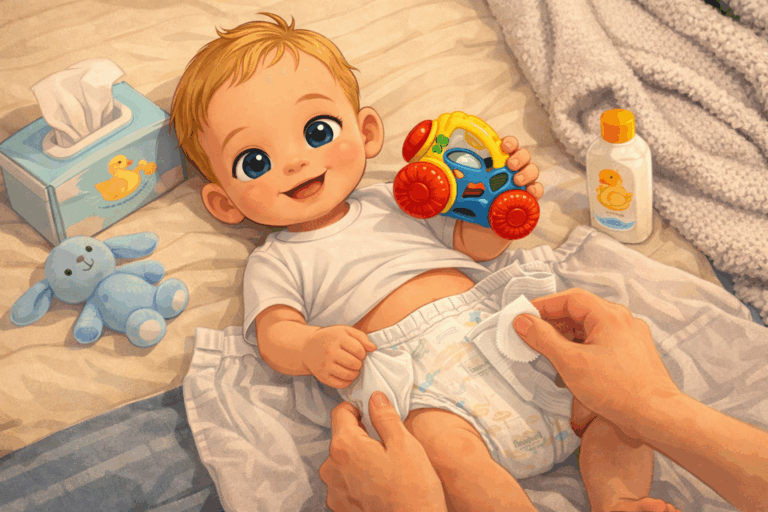
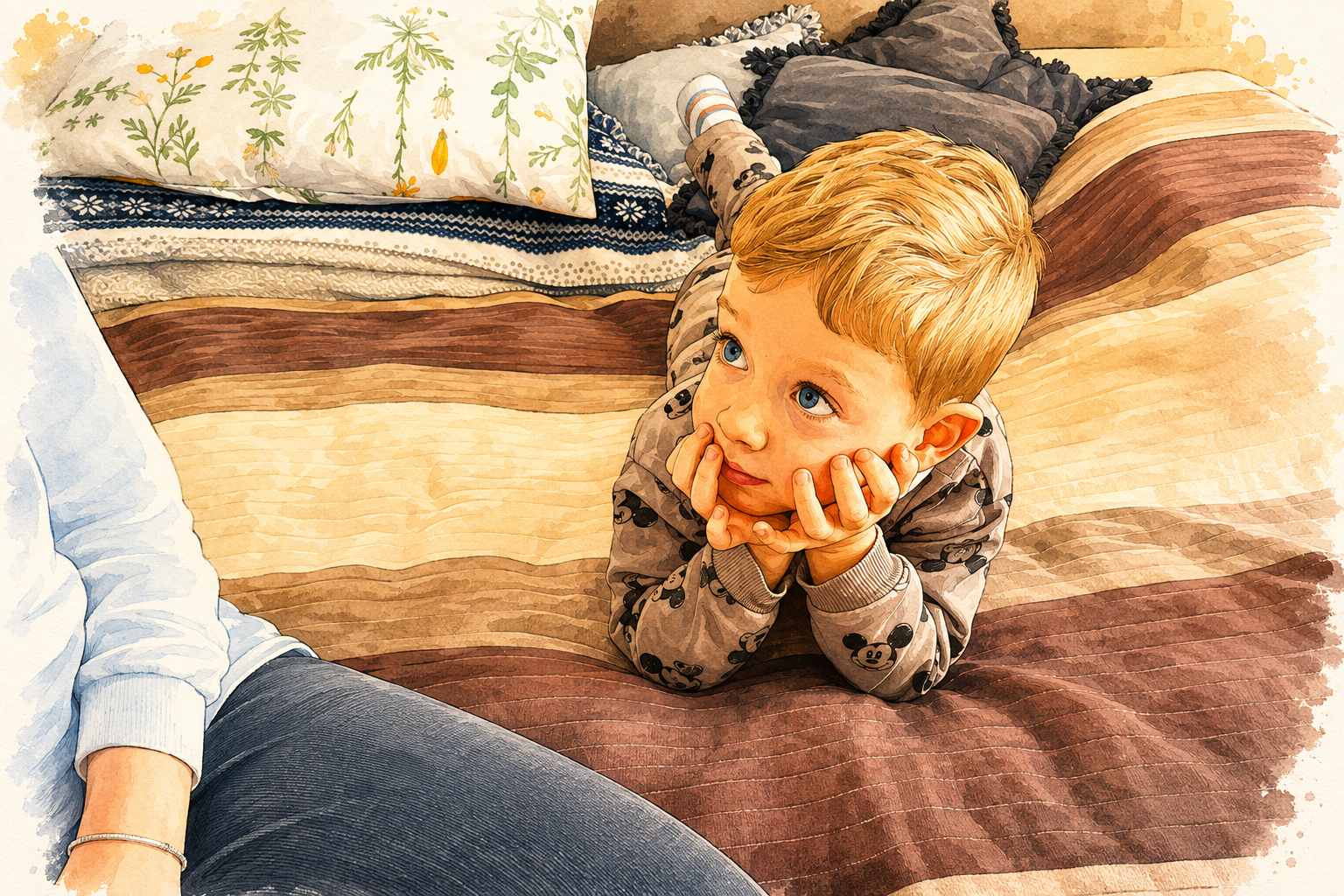
Privacy & Image Disclaimer
To protect our family’s privacy, all images on this blog are real-life moments, visually transformed into cartoon-style illustrations using AI. The stories are real. The emotions are real. The people are real. The art style is simply our way of keeping intimacy safe.