Newborn Sleep Myths: What’s Normal, What’s Weird, and What No One Explains
And yes, newborn sleep is not what you expect – in fact, nothing is during those first weeks when you bring your baby home from the hospital.
Newborn sleep looks strange.
Not “cute strange.”
Just… strange.
They sleep a lot.
They wake often.
They sleep deeply, until they don’t.
And no one really prepares you for what you’ll see.
“Why Is My Newborn Sleeping With Their Eyes Open?”
This question sends many parents straight to Google at 3 a.m.
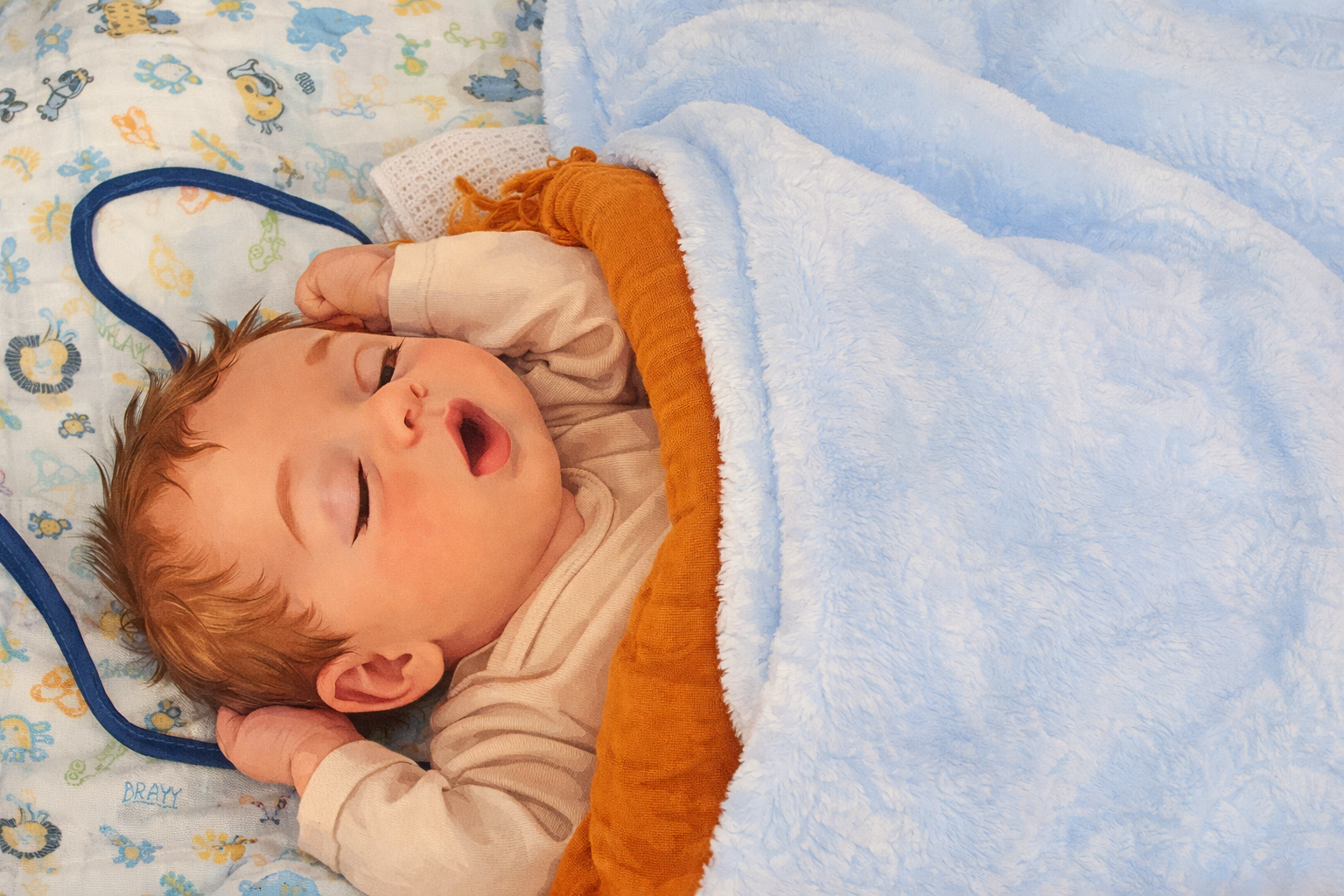
Yes: newborns can sleep with their eyes partially open.
Yes: their eyes can move rapidly underneath.
No, they are not awake.
No, it’s not dangerous.
It’s normal newborn sleep behavior.
But when you see it for the first time, it feels unsettling.
The Soft Spot on the Head (And Why You Can’t Stop Checking It)
Every parent checks the soft spot.
Over and over.
You see it pulse.
You see movement.
You wonder if that’s normal.
It is.
But knowing that doesn’t stop you from looking anyway.
Fear doesn’t disappear just because something is “normal.”
Should Newborns Sleep on Their Back, Side, or Stomach?
This is one of the most searched newborn questions.
And also one of the most debated.
We turned him from side to side after every wake-up.
We avoided letting him sleep exclusively on his back or stomach during the first months.
Other parents do it differently – and their babies are fine too.
There is no single perfect answer.
There are guidelines.
And there are personal choices.
Both can coexist.
The “Trial Phase” of Newborn Sleep
A friend once joked that the first months feel like a trial version.
The baby sleeps.
Wakes to eat.
Falls back asleep.
Sounds don’t wake them easily.
You start thinking: This isn’t so bad.
Then things change.
Sleep regressions.
Colic.
More awareness.
More crying.
That doesn’t mean you did something wrong.
It means the trial ended.
When You Stop Knowing What Time It Is
In the early weeks, time disappears.
You sleep in fragments.
You feed around the clock.
You stop caring if it’s day or night.
This isn’t failure.
It’s physiology.
And it passes.
Privacy & Image Disclaimer
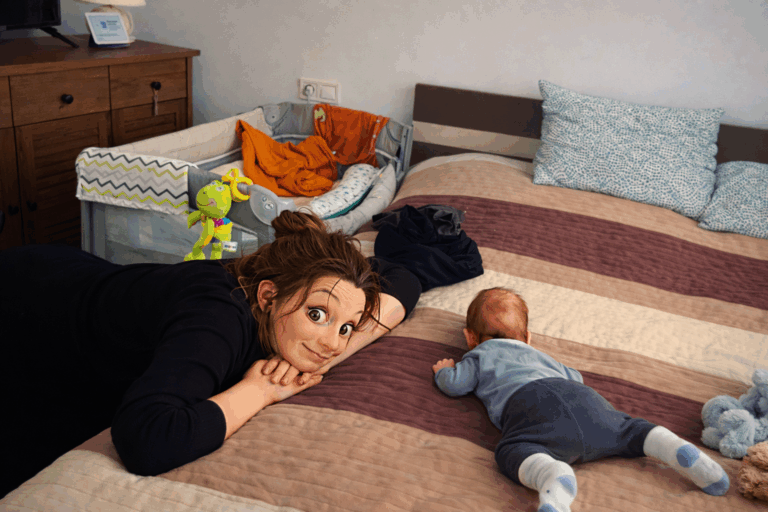
To protect our family’s privacy, all images on this blog are real-life moments, visually transformed into cartoon-style illustrations using AI. The stories are real. The emotions are real. The people are real. The art style is simply our way of keeping intimacy safe.