Raising a Bilingual Child Without Stress (Our Natural Approach)
Or how curiosity works better than pressure..
We never planned to raise a bilingual child.
At least not in the “programs, flashcards, strict rules” sense.
What we wanted was much simpler: a happy child who feels comfortable hearing, using, and exploring another language – without stress.
And that’s exactly how English entered Mike’s life – by the way, we’re Romanians 🙂
It didn’t start with lessons. It started with real life.
English didn’t come from an app or a course.
It came from travel.
On holidays, we naturally spoke English:
- with waiters,
- at hotels,
- in airports,
- in cities where English was the only common language.
At first, Mike just heard:
“Hi”
“Bye”
And then, one day, he started asking:
“How do you say this in English?”
That curiosity changed everything.
Curiosity beats structure at this age
Mike is not fluent in English.
And that’s perfectly fine.
He doesn’t need to be.
What matters is that:
- he recognizes the sounds,
- he enjoys hearing the language,
- he associates English with normal, everyday life.
When something feels natural, children absorb it without effort.
We speak English with him, not at him
We don’t switch the house to “English mode”.
We mix naturally.
At bedtime:
- “Noapte bună”
- “Good night”
In the morning:
- “Bună dimineața”
- “Good morning”
On birthdays:
- “La mulți ani”
- “Happy birthday”
No rules. No pressure. Just repetition.
Screen time helped – because we stayed involved
When Mike watches age-appropriate cartoons (limited, supervised), we stay with him.
That’s how he learned:
- all the colors in English,
- counting to 10,
- simple everyday words.
Now it’s completely normal for him to mix:
- a Romanian sentence,
- with a color in English.
Usually because he’s excited and talking fast 😄
That’s not confusion.
That’s processing.
Mixing languages is not a problem. It’s a stage.
Sometimes Mike says:
- the object in Romanian
- the color in English
Sometimes the other way around.
We don’t correct him harshly.
We simply repeat the sentence naturally.
Children don’t need grammar explanations.
They need exposure.
English lives in everyday moments
Mike knows words like:
- tractor
- police car
- fire truck
- tree
- hello / bye
- good night / sweet dreams
- kisses
Not because we “taught” them.
But because:
- we named things together,
- we talked about what we saw,
- we repeated words naturally.
Language lives in context.
We don’t want a bilingual toddler. We want a relaxed child.
This is important.
We don’t want:
- a three-year-old who feels pressure,
- a child who thinks learning is work,
- a kid who feels he must perform.
We want:
- curiosity,
- joy,
- confidence.
If English stays fun, it stays.
If it ever feels forced, it stops.
Why this works (especially at this age)
Young children are incredible at:
- recognizing sounds,
- mimicking pronunciation,
- absorbing patterns.
They don’t analyze language.
They feel it.
That’s why early exposure matters, even without formal learning.
Final thought: language grows where safety exists
Raising a bilingual child doesn’t require:
- expensive programs,
- perfect accents,
- strict routines.
It requires:
- presence,
- repetition,
- curiosity,
- emotional safety.
Mike doesn’t “learn English”.
He lives alongside it.
And for us, that’s more than enough.
Privacy & Image Disclaimer
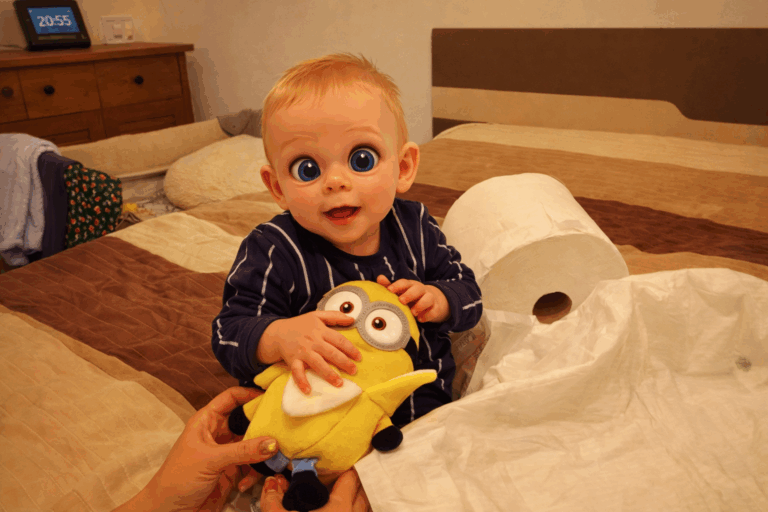
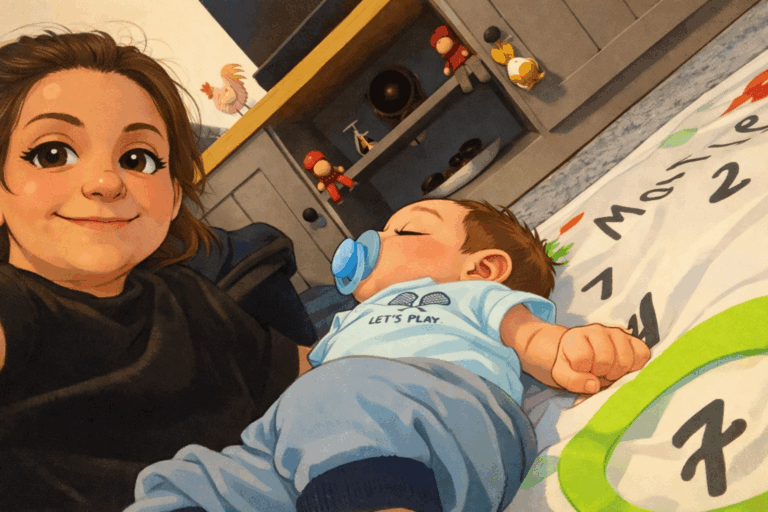
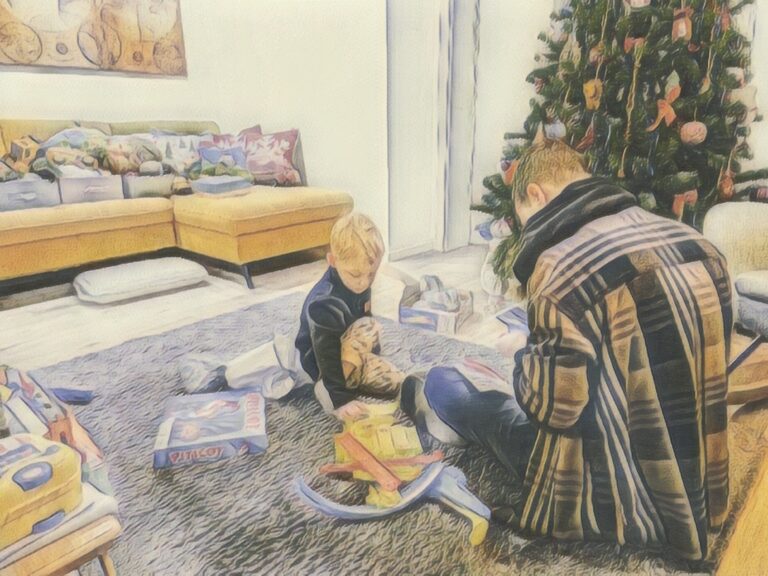
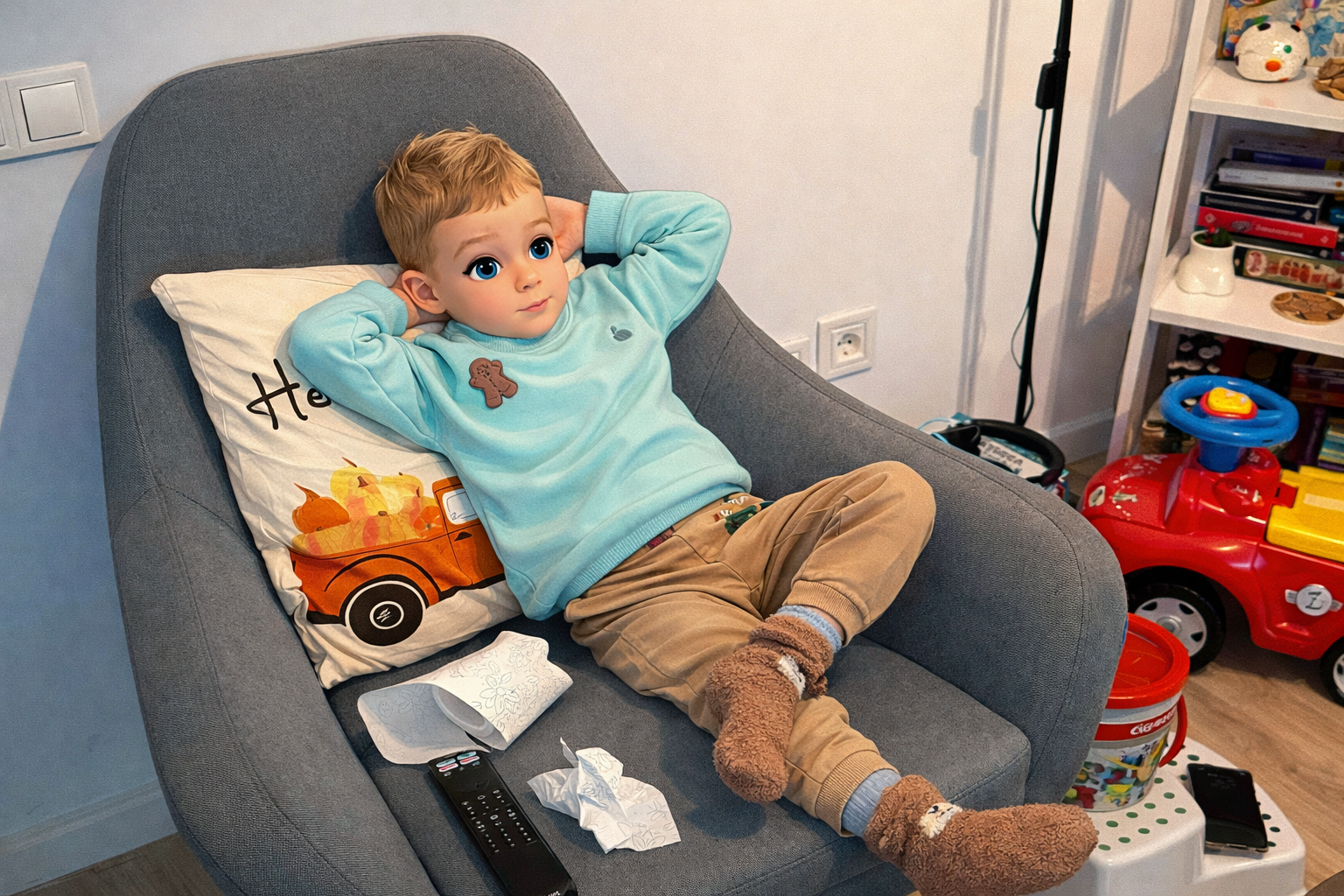
To protect our family’s privacy, all images on this blog are real-life moments, visually transformed into cartoon-style illustrations using AI. The stories are real. The emotions are real. The people are real. The art style is simply our way of keeping intimacy safe.