Our Baby Didn’t Tell Us He Needed to Pee. And That Was the Point
For a long time, Mike didn’t tell us he needed to pee.
Not before.
Not during.
Sometimes not even right after.
And honestly?
That was completely normal.
Why Parents Expect Toddlers to “Tell Us”
We hear it everywhere:
- “He’ll tell you when he’s ready.”
- “She’ll say when she needs to go.”
- “You’ll know.”
But no one explains when or how that ability actually develops.
So parents wait.
And wait.
And wait some more.
Then frustration kicks in.
The Brain Isn’t Ready Yet. And That’s Normal
The ability to:
- feel a sensation
- interpret it
- label it
- communicate it
- and act on it
…requires neurological maturity.
That maturity doesn’t appear at six months.
Or nine.
Or even twelve.
It develops gradually.
Expecting a baby or young toddler to announce bathroom needs is like expecting them to explain hunger in sentences before they speak.
What It Looked Like for Us
When we stopped using diapers during the day, something interesting happened.
Mike didn’t say “pipi” before.
He said it:
- while it was happening
- or immediately after
Sometimes he would:
- stand up
- spread his legs
- freeze
- look extremely uncomfortable
It was almost funny – and very human.
He didn’t like the feeling.
But he didn’t yet know how to prevent it.
Why Saying It After Still Matters
This is something many parents miss.
Saying “pipi” after is still learning.
It means:
- he noticed the sensation,
- he associated it with a word,
- he understood something happened.
That’s a huge step.
Learning doesn’t start before the accident.
It often starts because of it.
The Role of Repetition and Questions
At first, we asked him constantly:
- “Do you need to pee?”
- “Are you okay?”
- “Pipi?”
Sometimes he said no.
Then one minute later – accident.
That wasn’t lying.
That was development.
Over time:
- awareness improved,
- timing improved,
- communication improved.
Slowly. Naturally.
Why This Phase Is Important
This stage teaches:
- cause and effect,
- body signals,
- self-observation.
Skipping it doesn’t make things faster.
It just delays understanding.
Potty learning isn’t about control.
It’s about awareness.
And awareness takes time.
Privacy & Image Disclaimer
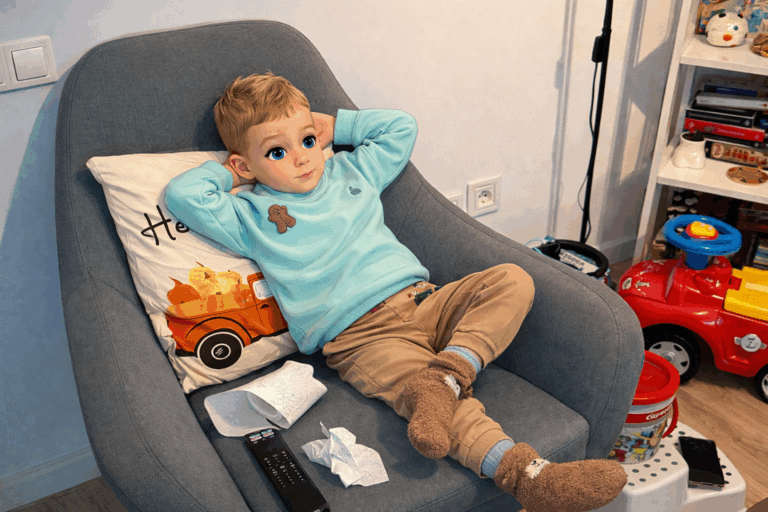
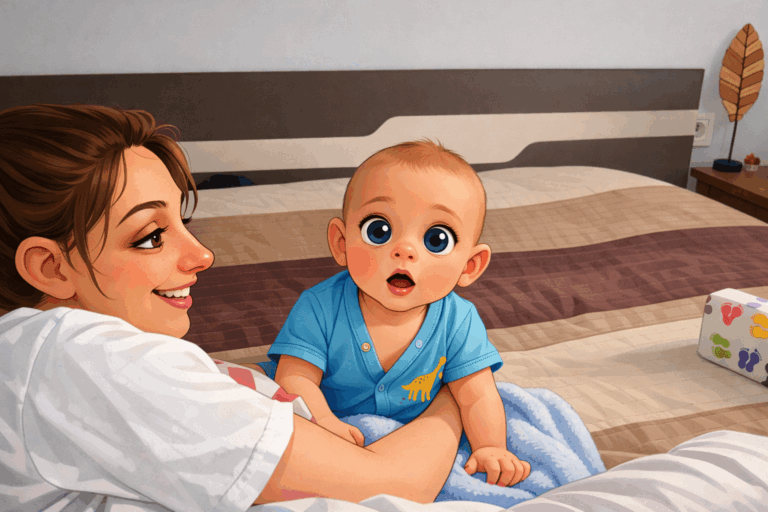
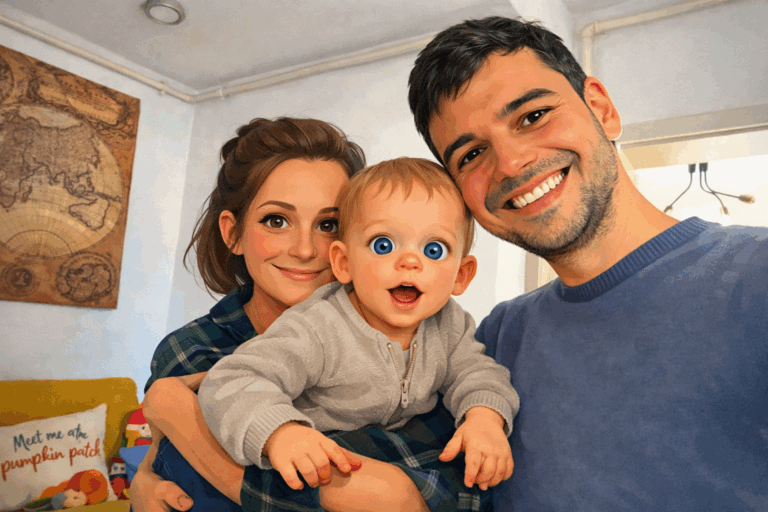
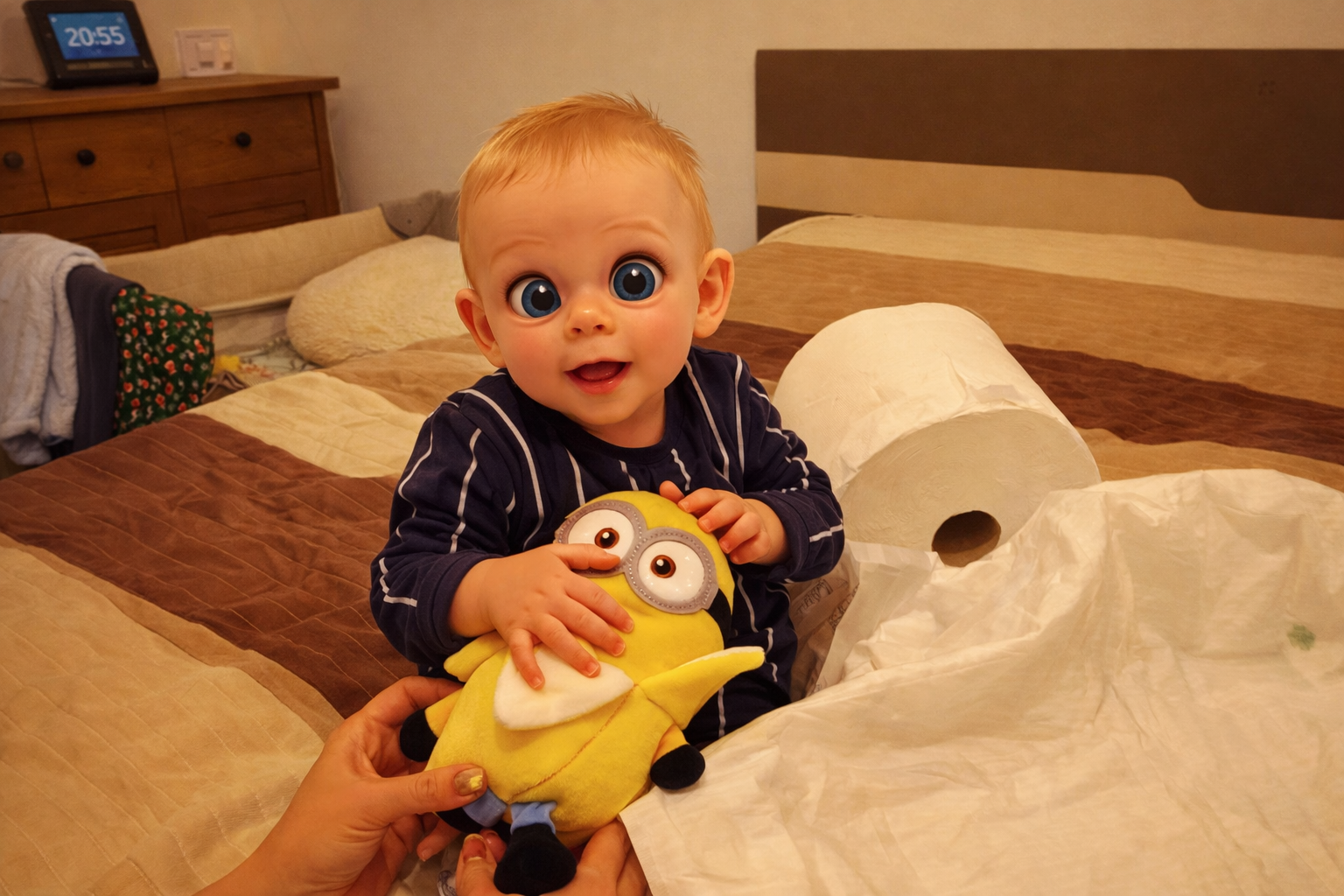
To protect our family’s privacy, all images on this blog are real-life moments, visually transformed into cartoon-style illustrations using AI. The stories are real. The emotions are real. The people are real. The art style is simply our way of keeping intimacy safe.