How Reading Together Helps Children Learn to Think, Not Just Talk
Or, why books are about connections, not just words when you raise a todler.
We started reading to Mike long before he understood what a story was.
At first, there were no questions.
No words.
Just pictures, voices, and us talking.
Now, at almost three, reading looks very different.
Because reading together didn’t just help him talk.
It taught him how to think.
Reading with a toddler isn’t about finishing the story
If you read with a young child, you already know this:
you rarely get from page one to the last page without interruptions.
And that’s the whole point.
Mike doesn’t sit quietly listening to a story.
He participates.
He asks.
He comments.
He connects.
Sometimes he answers before we finish the sentence.
That’s when we know reading is doing its job.
“Why?” is not a phase. It’s a skill.
Mike asks why all the time.
Why does he fly?
Why is that car racing?
Why is the helicopter there?
Why is he sad?
Why are they friends?
Those questions don’t come from nowhere.
They come from:
- shared reading,
- shared attention,
- shared curiosity.
Books give him a safe space to explore cause and effect, without pressure.
When books connect to real life, learning sticks
One of our favorite moments happened while reading a book about airplanes.
At some point, a character flies over Germany.
Mike immediately asked:
“Is he going to grandpa?”
“Does grandpa live there?”
That connection didn’t come from the book alone.
It came from:
- past conversations,
- family stories,
- geography turning into meaning.
Suddenly, Germany wasn’t just a word.
It was someone he loves.
Cars, friendship, and asking the right questions
Mike loves Cars.
He likes Lightning McQueen.
He loves Mater.
He’s fascinated by helicopters.
And he’s obsessed with Mack, the red truck.
But what matters isn’t the characters.
It’s the questions:
- Why does he race?
- Why are they friends?
- Why does Mack help him?
Stories become tools for:
- understanding motivation,
- recognizing emotions,
- observing relationships.
And we don’t rush to answer.
Sometimes we ask him back:
“Why do you think?”
Books as mirrors of daily life
One of his favorite books is about a little girl who:
- goes to the farm,
- goes to kindergarten,
- does everyday activities.
Mike constantly links the story to us:
- “Like we did yesterday”
- “Like mommy”
- “Like at home”
Books stop being fiction.
They become reflection.
That’s how children learn: by placing new information inside what they already know.
The surprise factor: when connections appear out of nowhere
One of the most fascinating things about reading with Mike is this:
He absorbs a lot – quietly.
Then, days later, out of nowhere, he says something that stops us in our tracks.
A connection we didn’t expect.
A memory we didn’t realize stuck.
An idea he built on his own.
That’s when you understand: learning doesn’t always happen in the moment.
Reading teaches more than language
Yes, reading helps with:
- vocabulary,
- pronunciation,
- sentence structure.
But more importantly, it helps with:
- critical thinking,
- emotional understanding,
- pattern recognition,
- curiosity.
Reading teaches children how to observe, not just repeat. Just like playing with toys.
Your tone matters more than the story
One thing we’ve learned quickly:
Children don’t just absorb words.
They absorb energy.
Calm creates calm.
Smiles create smiles.
Presence creates safety.
If we read while relaxed, Mike relaxes.
If we enjoy the story, he enjoys it.
If we rush, he feels it immediately.
The book is just the medium.
The message comes from us.
Our rule: reading is an invitation, not an obligation
Some days Mike wants:
- the same book again and again
Other days:
- he doesn’t want books at all
That’s okay.
We never force it.
We never pressure it.
We never turn it into “learning time”.
Because the goal isn’t performance.
The goal is:
- curiosity,
- connection,
- joy.
Books don’t raise thinkers. But relationships do
Books don’t magically make children smarter.
But reading together creates something powerful: a space where thinking is allowed, encouraged, and safe.
Mike doesn’t just learn words from books.
He learns how to connect ideas.
How to ask questions.
How to relate stories to life.
And that’s a skill that will follow him long after bedtime stories end.
Privacy & Image Disclaimer
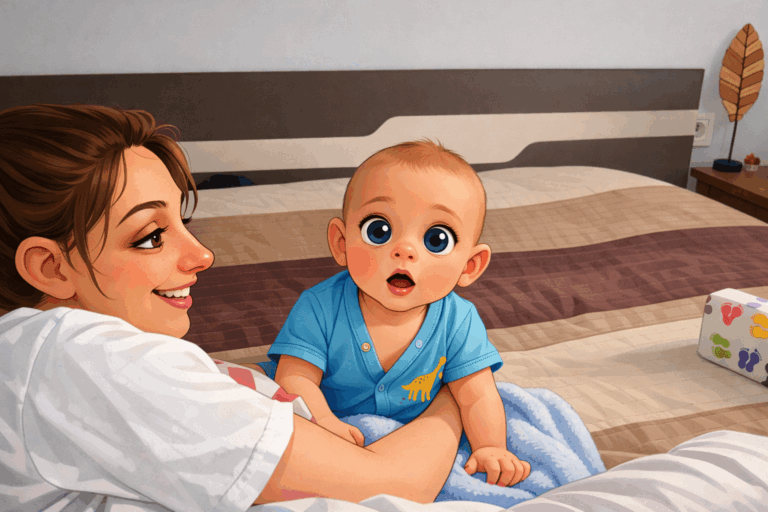
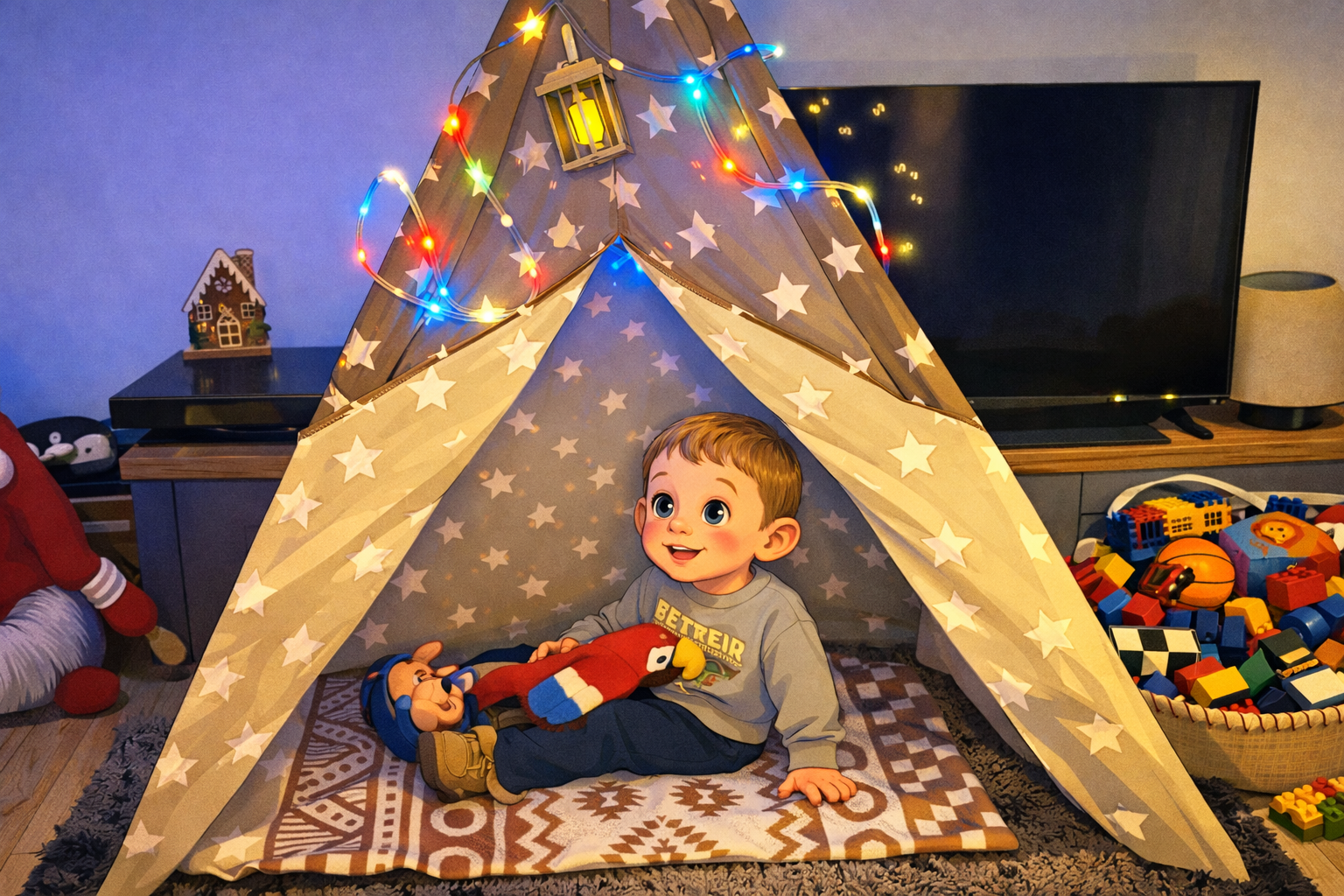
To protect our family’s privacy, all images on this blog are real-life moments, visually transformed into cartoon-style illustrations using AI. The stories are real. The emotions are real. The people are real. The art style is simply our way of keeping intimacy safe.