The Importance of Playing With Your Child – Growing Together With Mike
When Mike was born, we tried (and still try) to let one simple principle guide us:
👉 How would a child grow naturally – happy, curious, and carefree – if life were simpler?
Closer to nature.
Fewer complications.
Less technology.
More presence.
Of course, we understand the usefulness of modern life. We’re not anti-technology, anti-screens, or anti-comfort. But especially in the early years, we wanted to understand what a child’s body and brain truly need in order to grow healthy, balanced, and happy.
And one thing became very clear very fast:
Play is essential.
Not just for kids.
For parents too.
Why Playing With Your Child Matters More Than You Think
From the very beginning, we made a conscious decision:
we didn’t want to “park” Mike in front of a TV or a phone just because it was easier.
Yes, it is easier.
Yes, it does give you a few moments of silence.
But it also takes something away.
Playing together means:
- real connection,
- communication,
- shared experiences,
- emotional safety.
It’s how children learn the world and how parents stay connected to it.
I was lucky enough to work from home, which allowed me to be present during Mike’s early months. And presence changes everything.
Play Is Not Separate From “Real Life”
One thing many adults forget is this:
A 2- or 3-year-old doesn’t understand the difference between play and work.
That separation is taught. By us.
For Mike, everything is play – and that’s beautiful.
- When Andie cleans, Mike “cleans” too.
He has a little brush that he believes cleans the balcony window. - He uses toys as a vacuum cleaner.
- We tidy up toys together – not because it’s messy, but because it’s part of the game.
- He helps in the kitchen, kneading dough for bread or pizza.
We even give the dough eyes and a mouth before letting it rise.
Was he fully aware of what we were doing when he was one year old?
Of course not.
But he was with us.
And that matters more than understanding.
How Playing Together Supports Healthy Child Development
Playing together helps children:
- learn how to communicate,
- develop language naturally,
- understand routines without pressure,
- feel included and valued,
- build confidence and curiosity.
And something else we noticed early on:
When Mike spends too much time watching cartoons or looking at a screen, he… disappears a little.
He becomes distant. Less present.
Almost “offline”.
We don’t forbid screens completely. But when he does watch something, we stay with him:
- we talk about what he sees,
- we ask questions,
- we stay connected.
Screens don’t replace interaction.
They only work with it.
Yes, It’s Tiring. But Your Brain Adapts Too
Let’s be honest.
Being present all the time is exhausting at first.
But something interesting happens:
your brain adapts.
This becomes your new normal.
Today, if I suddenly stopped playing, talking, building, pretending, and “working” alongside Mike, I would genuinely feel bad; physically and mentally.
It’s not about perfection.
It’s about consistency.
Growing With Your Child, Not Just Raising Them
This is the part people don’t talk about enough.
You don’t just raise a child.
You grow with them.
You rediscover patience.
Creativity.
Joy in simple things.
Watching Mike invent ideas, ask questions, help, play, talk, and laugh, all while feeling safe and loved, reminds us every day why this effort matters.
Not because it’s trendy.
Not because a book says so.
But because it works.
And because a happy child doesn’t need much:
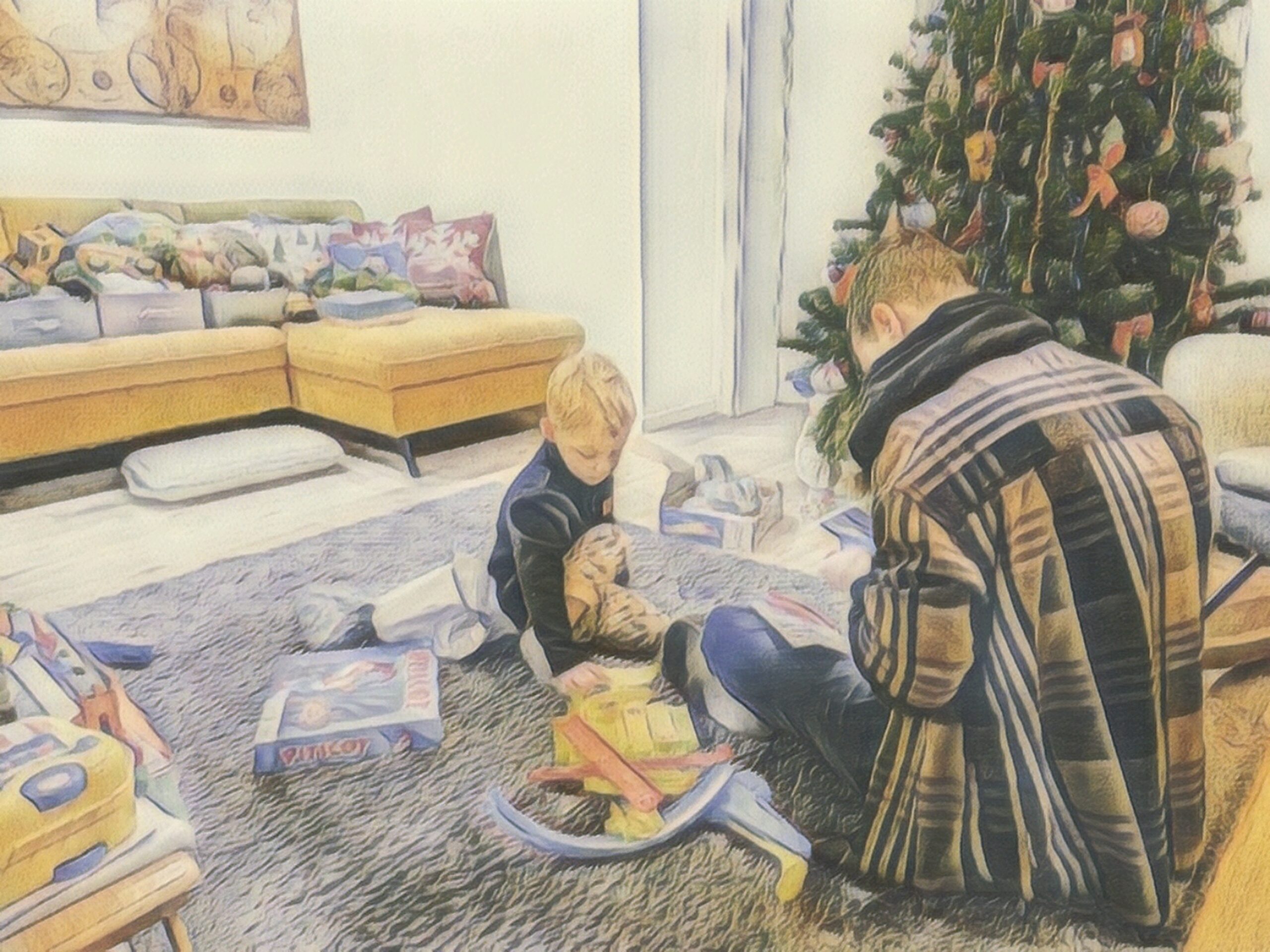
just time, presence, and someone willing to sit on the floor and play.
Privacy & Image Disclaimer
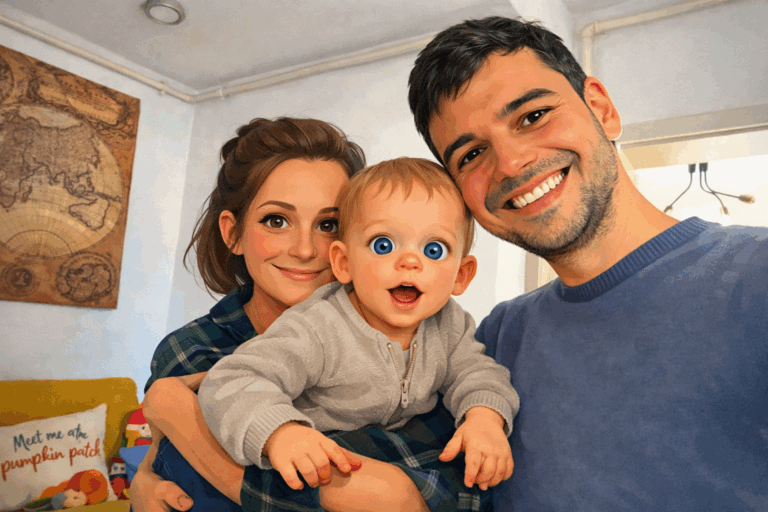
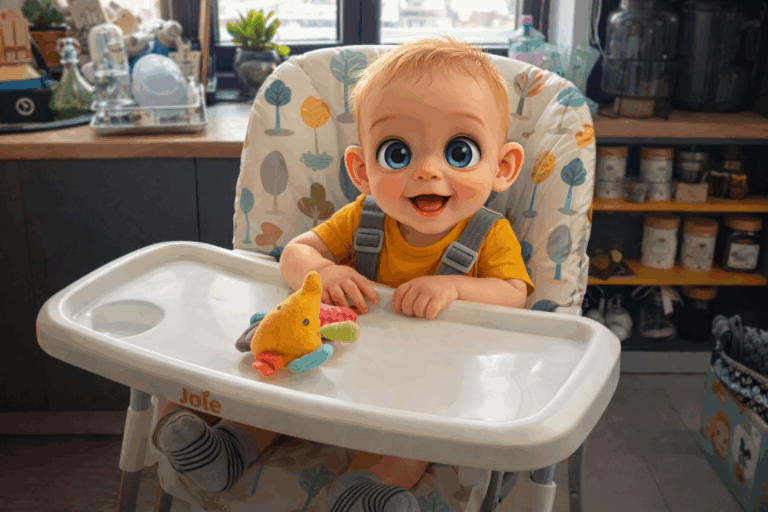
To protect our family’s privacy, all images on this blog are real-life moments, visually transformed into cartoon-style illustrations using AI. The stories are real. The emotions are real. The people are real. The art style is simply our way of keeping intimacy safe.